A broken phone is often considered recycling bin fodder, but that is not always the best option. Even if your device has a cracked screen, battery issue or other faults, it can still hold value because many components can be refurbished, repaired or reused. Choosing to sell old broken phones before considering recycling allows you to recover some of that value while helping extend the life of electronic devices.
According to the UK Government’s Waste Electrical and Electronic Equipment (WEEE) guidance, reusing electrical equipment is prioritised over recycling wherever practical, as it helps conserve valuable materials and reduce waste.
LCD Buyer provides a straightforward way for individuals and businesses to sell damaged phones and LCD screens through a transparent inspection process
Key Takeaways
- Even a broken phone has some resale value.
- Selling first can help you make money before you have to recycle.
- Trusted buyers will inspect your device and give you a fair and transparent valuation.
- Compare buyers and find a fair and reliable service.
- By selling broken phones we can reuse valuable electronic parts.
Why is selling often a better option than immediate recycling?
Recycling plays an important role in reducing e-waste, but people generally see it as a last resort after they have exhausted opportunities for reuse. Many broken phones still have good screens, internal components, cameras and circuit boards that you can repair or repurpose.
There are plenty of benefits to selling your broken device:
- Recover value from an otherwise unused phone.
- Support refurbishment and reuse.
- Reduce unnecessary electronic waste.
- Help extend the lifespan of usable components.
- Simplify responsible device disposal.
Instead of throwing out every broken phone, think about whether it might be worth reselling.
What happens after you sell a broken phone?
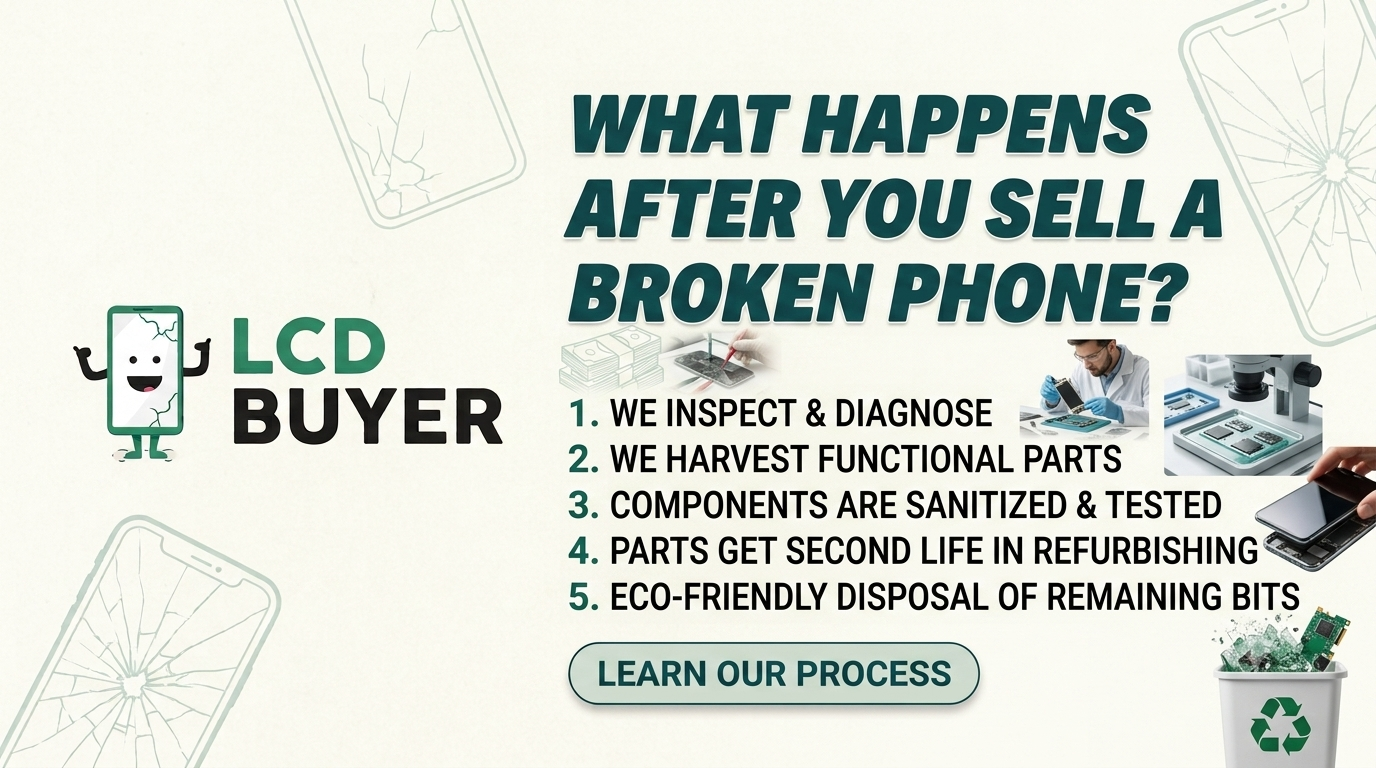
Many people believe that broken phones are just ripped apart for scrap. In practice, specialist buyers will inspect each phone to see if parts of the handset can be reused or if the whole phone can be reused.
Based on its condition, a phone can be classified as the following:
- Repaired for reuse.
- Used for replacement parts.
- Refurbished where practical.
- Recycled only when components are no longer usable.
This process maximises the use of electronic materials and reduces waste.
How do you choose where to sell cracked phones?
Not every buyer offers the same level of transparency. Before sending your device, take time to compare services rather than accepting the first available quote.
Looking beyond the advertised price helps you make a more informed decision and reduces the chances of unexpected surprises. The following comparison can help.
| What to Compare | Trusted Buyer | Less Reliable Buyer |
| Pricing | Clear valuation process | Unexpected price reductions |
| Shipping | Secure and explained | Limited shipping information |
| Inspection | Transparent assessment | Unclear grading criteria |
| Communication | Regular updates | Poor customer support |
| Payment | Prompt after inspection | Delayed or uncertain payments |
Don’t underestimate the value of older devices
Even older smartphones can retain value when key components remain usable. Cosmetic damage does not always determine whether a phone is worth purchasing.
Before deciding what to do with your device, consider factors such as:
- Overall physical condition
- Screen functionality
- Battery performance
- Device model
- Storage capacity
- Previous repairs
These details often influence the final valuation far more than appearance alone.
LCD Buyer purchases damaged phones and LCD screens, explains its inspection process, and provides payment after evaluating received devices. Reviewing the published buying process allows sellers to understand what to expect before sending their items.
Why does choosing the right buyer make a difference?
The experience of selling a damaged phone depends largely on the company you choose. A reliable buyer communicates clearly, explains how they assess devices, and keeps you informed throughout the process.
Before making your decision, check for:
- A straightforward buying process
- Clear inspection criteria
- Honest pricing with no hidden conditions
- Responsive customer support
- Secure packaging and shipping guidance
Taking a few extra minutes to compare services can help you sell old used phones with greater confidence and avoid unnecessary complications.
What should you do before sending your phone?
Preparing your phone correctly protects both your personal information and the device itself during transit.
Follow these simple steps:
- Back up important files.
- Remove personal data by performing a factory reset.
- Sign out of your accounts.
- Remove the SIM card if applicable.
- Package the device securely using the buyer’s instructions.
A little preparation makes the selling process smoother and reduces the likelihood of delays during inspection.
Why selling supports a more sustainable future
Choosing a specialist buyer is not only about recovering value. It also contributes to a circular economy where functional components remain in use for longer instead of being discarded prematurely.
At LCD Buyer, reusable LCD screens and whole phones are inspected before being graded. Where possible, devices and components can be reused or repaired, helping reduce electronic waste before recycling becomes necessary
If your phone still has recoverable value, obtaining cash for broken phones is often a more practical first step than immediately recycling the entire device.
Buy From LCD Buyer the Broken Phones for the Better Deal
Before placing your damaged handset into a recycling bin, consider whether it could still provide financial value. Choosing to sell old broken phones first allows reusable components to remain in circulation while giving you the opportunity to recover money from a device you no longer need.
LCD Buyer offers a transparent process based on the information available on its website, helping individuals and businesses sell damaged phones and LCD screens through a clear inspection and valuation procedure. If you want a straightforward way to turn a broken device into value while supporting responsible electronic reuse, start by reviewing the buying process and sending your device for assessment.
Frequently Asked Questions
1. Is selling a broken phone better than recycling it?
Yes. If the device still contains reusable parts, selling it first may recover value before recycling becomes the most appropriate end-of-life option.
2. Can I sell a phone with a cracked screen?
Yes. Many specialist buyers purchase phones with cracked or damaged screens, although the final valuation depends on inspection and overall device condition.
3. What affects the value of a broken phone?
The model, age, physical condition, display functionality, battery health, storage capacity, and overall inspection results usually determine the final purchase offer.
4. Should I erase my personal data before selling?
Absolutely. Back up important files, sign out of your accounts, perform a factory reset, and remove your SIM card before shipping the device.
5. How long does the selling process usually take?
The timeframe varies by buyer, but reputable companies normally inspect received devices promptly and issue payment after completing the evaluation process.