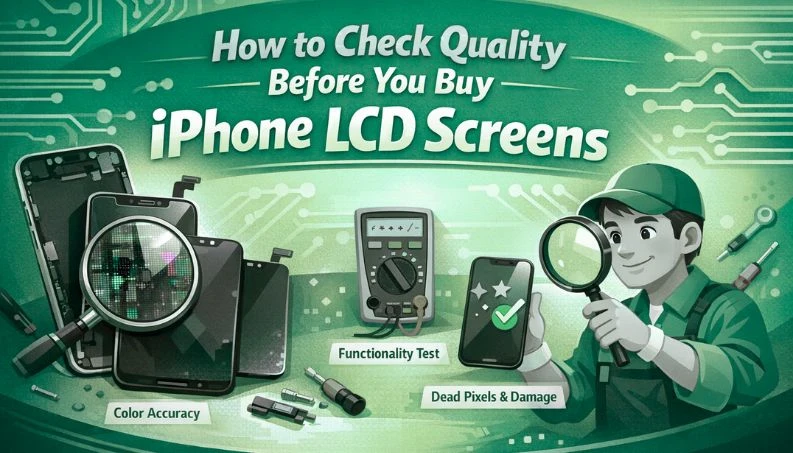
Buying a new iPhone screen can be a daunting task, especially when there are so many levels of quality available for purchase online. If you are looking to buy iPhone LCD screens for resale or repair, it is important to understand how to check quality before purchase. A low-quality screen can impact the touch sensitivity, screen brightness, battery life, and even resale value.
“According to Material Focus, a UK government-backed organisation focused on electronic waste reduction, millions of electrical items in the UK are replaced or stored unused instead of being reused or repaired. This is why purchasing high-quality replacement parts, such as iPhone LCD screens, is so important to reducing unnecessary electronic waste.”
At LCD Buyer, understanding quality is important to us because the condition of the screen is a major factor in the resale value of a phone. Learning how to evaluate LCD quality before buying helps you avoid extra expenses and ensures lasting reliability.
Key Takeaways
- Not all iPhone LCD screens offer the same quality
- Visual and touch testing prevent costly mistakes
- OEM and aftermarket screens differ in performance
- Build quality matters more than price alone
- Better screens improve resale value and reduce waste
Why screen quality matters more than most people think
An iPhone screen is more than just glass. It controls touch sensitivity, colour accuracy, brightness, and power efficiency. Choosing the wrong LCD can lead to frequent replacements, unhappy customers, or lower resale value.
A high-quality screen helps:
– Maintain accurate colours
– Preserve smooth touch response
– Reduce eye strain
Extend the phone’s usable life
This is why it’s crucial to understand how to check iPhone LCD quality before buying.
How can you visually inspect an iPhone LCD before buying?
Visual inspection is the first and easiest quality inspection. Even before installation, you can spot warning signs of a substandard LCD screen.
Look closely for:
- Uneven backlight or dark patches
- Yellow or blue colour tint
- Visible pixel lines
- Loose connectors or misaligned frames
A proper iPhone LCD quality check begins with a visual inspection because cosmetic flaws are often a sign of internal quality problems.
iPhone LCD vs. OEM: What’s the Real Difference?
Understanding iPhone LCD vs. OEM screens help you set realistic expectations.
| Feature | OEM Screen | Aftermarket LCD |
| Colour accuracy | Excellent | Varies |
| Brightness | Consistent | Often lower |
| Price | High | More affordable |
| Availability | Limited | Widely available |
OEM screens are manufactured to Apple’s original specifications, while aftermarket LCDs vary by supplier. High-quality aftermarket screens can still perform well, but poor ones may fail quickly.
How to test touch and display performance properly
How to properly test the touch and display functionality. This step is often skipped, but it is essential to check the iPhone screen quality.
Important factors to consider when testing:
- Multi-touch functionality
- Screen brightness when at maximum brightness
- Colour consistency across the display
- No delay or ghost touches
Skipping this step can result in repeat repairs and dissatisfied end users.
The quality of the build tells you more than the price
The price of a screen does not necessarily indicate the quality. There are some low-priced screens that work well and some high-priced ones that do not last long.
In order to determine the physical quality of the screen, you need to examine the following:
- Frame sturdiness
- Connector strength
- Glass thickness
- Flex cable alignment
All these factors can distinguish an average screen from the best iPhone LCD quality options available.
What should a smart iPhone LCD buying guide include?
A practical iPhone LCD buying guide focuses on consistency, supplier reliability, and testing procedures rather than just cost.
A good buying checklist:
- Verified supplier reputation
- Clear return or replacement policy
- Pre-shipment testing confirmation
- Compatibility with specific iPhone models
Reliable sourcing reduces risk and ensures predictable results.
Common mistakes buyers make when choosing LCD screens
Most buyers unknowingly settle for substandard quality by:
- Choosing the cheapest option available
- Skipping pre-installation testing
- Ignoring supplier reviews
- Mixing screen grades unknowingly
Avoiding such pitfalls will save time, money, and effort in the long run.
Why quality screens matter for resale and sustainability
Quality screens enhance the resale value of a phone and prevent electronic waste. Low-quality screens tend to fail prematurely, resulting in frequent replacements and disposal.
Choosing better screen supports:
- Longer device lifespans
- Reduced environmental impact
- Better resale returns
This is in line with the sustainable reuse and refurbishment of devices in the UK.
Buy better, fix better, waste less
Making the right screen choice is not only about the current repair but also about future performance. By knowing how to evaluate quality, you make better purchasing decisions that will benefit not only consumers but the planet as well.
Choose Quality with Confidence – Make the Right Screen Decision
When looking for screens to repair or refurbish, quality should never be a secondary consideration. By making the right decisions, you will protect your investment and avoid unnecessary waste. At LCD Buyer, knowing the quality of the components is essential in ensuring that devices last longer because every good screen gives a phone a longer life. Get in touch today and give your device a longer life with quality screens from LCD Buyer!
FAQs
1. How do I check iPhone LCD quality before installing it?
Inspect colour uniformity, brightness, and touch response using a test device before installation.
2. Is OEM always better than aftermarket LCD?
OEM is consistent, but high-grade aftermarket screens can perform well if sourced carefully.
3. Why do some replacement screens drain the battery faster?
Low-quality LCDs often lack proper power optimisation, increasing battery usage.
4. Can poor LCD quality affect phone resale value?
Yes, screen quality directly impacts buyer confidence and resale pricing.
5. What should I look for when I buy iPhone LCD screens in bulk?
Supplier reliability, testing procedures, compatibility, and return policies are essential.